What goes in the notebook.
A repeatable little routine
I begin with the date, the time, and where I am standing. It sounds unnecessarily obvious until I find a page from three weeks ago with a beautiful cloud drawing and no indication of whether I was at home or across town. Context turns an attractive scribble into an observation I can actually use.
The next line describes the sky in ordinary words. I mention how much is covered, whether the cloud edges look sharp or soft, and which direction the most visible cloud is moving. I keep the description short enough that I can repeat it on an inconvenient morning. Elaborate systems tend to outlive my enthusiasm by about four days.
I record the rain gauge only after checking it for leaves and making sure I have not forgotten a previous reading. If I miss a day, I write that down instead of inventing a tidy daily amount. A gap is honest information. An unexplained number can make a later comparison look much more convincing than it deserves.
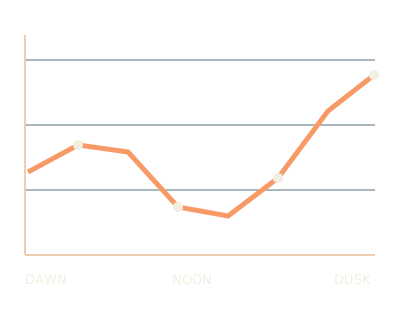
Finally, I add one thing that surprised me. It might be cooler air at the porch steps or a bright opening under a dark cloud. That last sentence keeps the routine from becoming a chore. The little chart here is a schematic of changing pressure, drawn to show the idea of a pattern rather than a particular day’s measurements.